BD-1050
Product Details
BD-1050
Two-component Self-defoaming Silicone Rubber, Bionic Skin Silicone
Chemical Composition: Two-component liquid silicone rubber
Product Introduction & Core Advantages
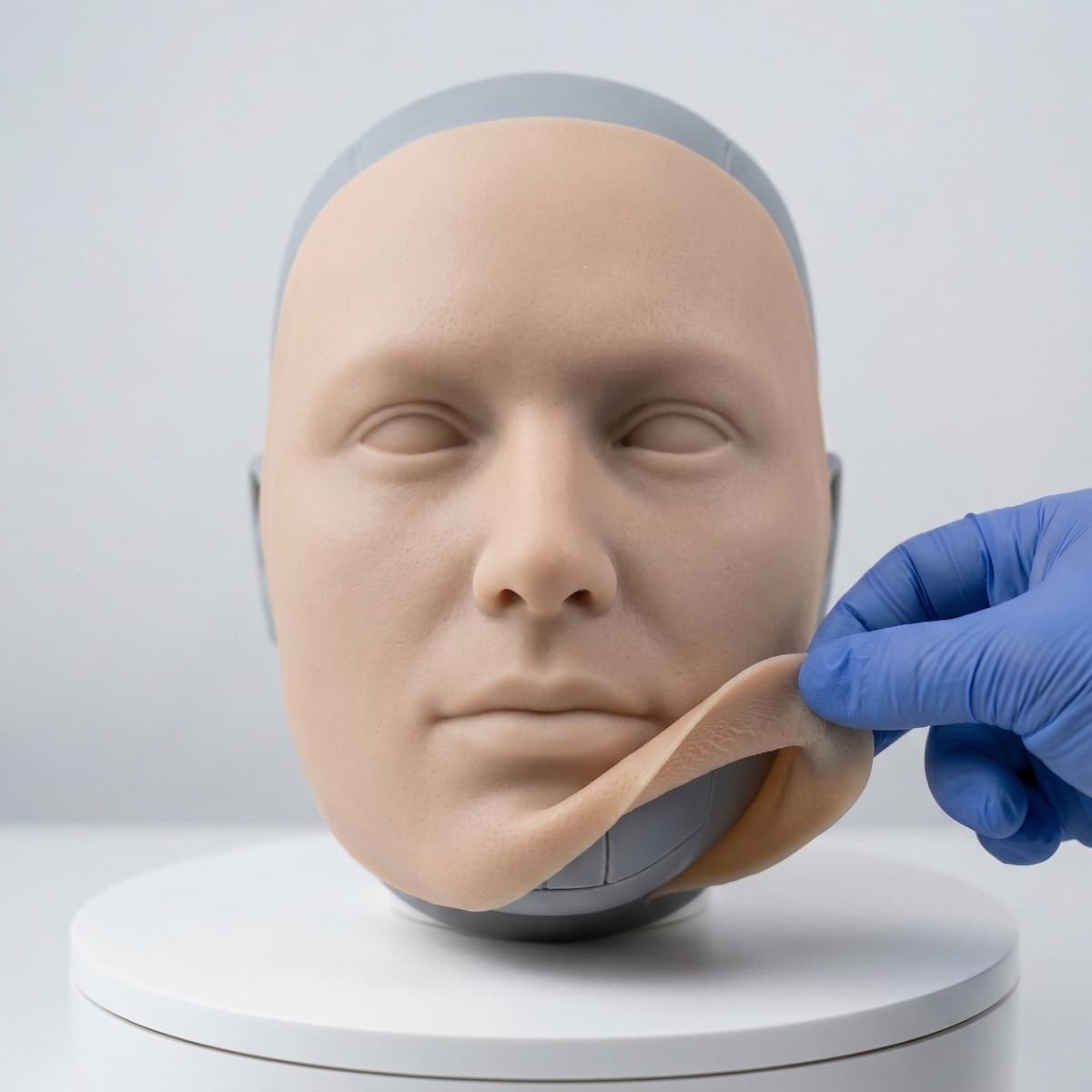
BD-1050 is a low-hardness addition-cure liquid silicone rubber specifically designed for high-simulation human skin, robotic facial skin, special effects makeup, and other fields. In response to application scenarios such as robotic facial skin that require extremely high detail performance and dynamic tactile feel, this product demonstrates significant targeted advantages:
- Excellent Simulation & High Dynamic Elasticity: Featuring low hardness (Shore 00-50) and exceptional elasticity (elongation at break ≥600%), the cured surface is dry to the touch after mixing. it provides a tactile sensation close to real human skin and perfectly supports natural stretching and rebound when robots perform complex facial expressions.
- Superior Self-defoaming Performance: The low viscosity of the product system (3000-5000 mPa·s) ensures excellent fluidity after mixing and outstanding self-degassing capabilities. In fine facial mold casting, it effectively avoids pores and defects, achieving a dense and delicate surface finish without the need for complex vacuum equipment.
- Safe, Eco-friendly & Efficient Curing: Utilizing a platinum curing system, it is environmentally safe and non-toxic. It also supports low-temperature self-curing for convenient operation.
Typical Physical & Chemical Data
| Performance Index | Test Standard / Condition | BD-1050A | BD-1050B |
|---|---|---|---|
| Appearance | - | Flowable translucent liquid | Flowable translucent liquid |
| Specific Gravity (g/cc) | ASTM D-1475 | 1.07 | 1.07 |
| Mixing Ratio (by weight) | - | 1 : 1 | - |
| Mixed Viscosity | ASTM D-2393 | 3000 - 5000 mPa·s | - |
| Hardness | ASTM D-2240 | Shore 00-50 | - |
| Elongation at Break | ASTM D-412 | ≥ 600% | - |
| Tensile Strength | ASTM D-412 | ≥ 320 psi | - |
| Tear Strength | ASTM D-624 die B | ≥ 100 pli | - |
| Working Time (Pot Life) | 25±2℃ | 30 min | - |
| Full Cure Time | 25±2℃ | 6 hours | - |
Applications
- Robotic Skin Silicone: Faces of various humanoid robots, bionic limbs, etc.
- Makeup & Prosthetic Silicone: Film and television special effects, simulation masks, and anatomical model production.
- Electronic Encapsulation & Damping: Potting and vibration protection for precision electronic components.
Instructions for Use
- Mixing: Mechanical stirring can be used for A/B component mixing, or a static mixer may be employed.
- Curing Conditions: Curing can be achieved within a temperature range of 40-150°C. Increasing the curing temperature can significantly shorten the curing time, but for thicker products, caution should be taken as rapid curing may lead to air bubble formation.
- Inhibition (Poisoning) Prevention: Clean all equipment before use. Substances containing tin salts, amines, or sulfur may inhibit the curing reaction (commonly known as "silicone poisoning").
- Condition Testing: The performance of the product after curing depends on the curing conditions. It is recommended to perform tests prior to full production to determine the optimal curing parameters.
Packaging & Storage
- Packaging Specifications: 1kg and 25kg; customization available upon request.
- Storage Conditions: Store in a cool, dry place in sealed containers.